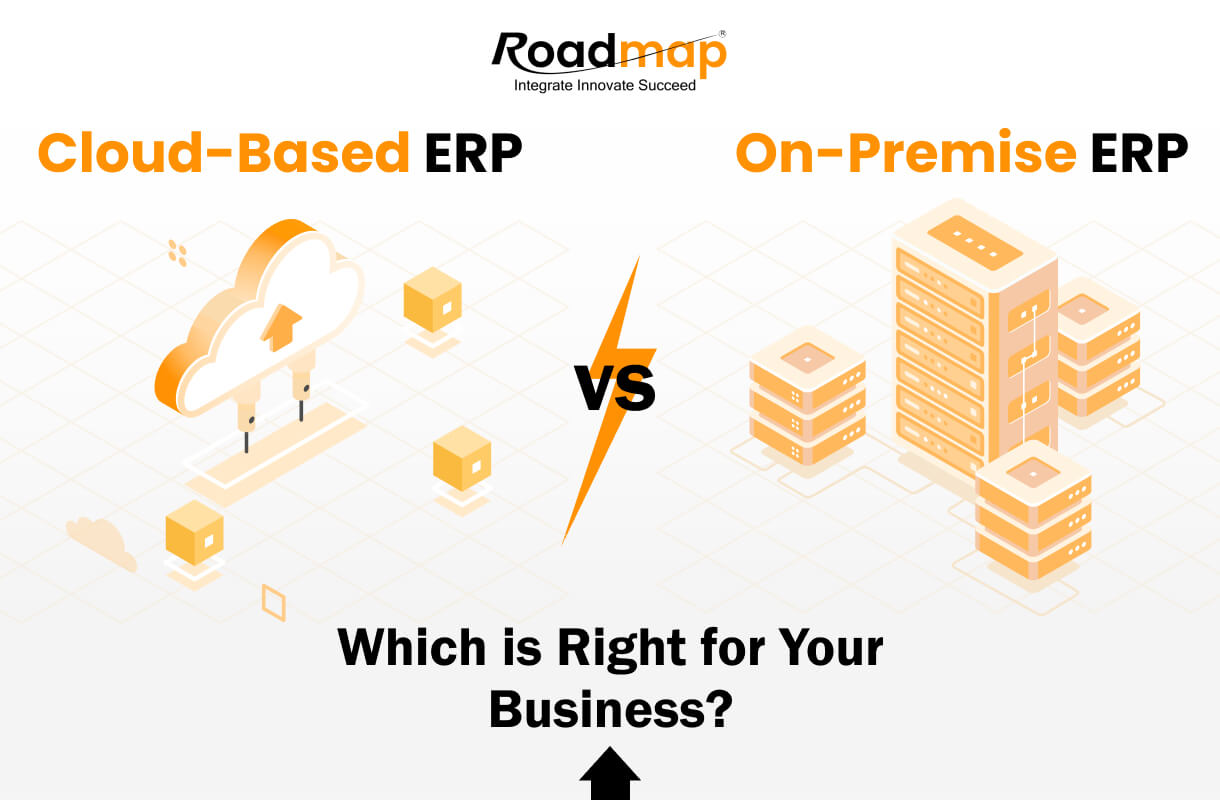
Cloud-Based ERP vs. On-Premise ERP: Which is Right for Your Business?
When it comes to selecting the right ERP
(Enterprise Resource Planning) solution for your business, the choice often
boils down to two options: Cloud-Based ERP or On-Premise ERP.
Each has its own set of benefits and challenges, making the decision critical
for your business's success. Let’s break down these two options so you can make
an informed choice.
What Is On-Premise ERP?
On-premise ERP systems are installed
locally on your company’s servers and managed by your IT team. This traditional
approach has been a go-to for businesses seeking full control over their ERP
solutions.
Benefits of On-Premise ERP
- Complete Control: Your business
retains full ownership of the software, data, and infrastructure.
- Customization: On-premise systems
can be tailored extensively to meet your unique business needs.
- Enhanced Security: Data stays
within your internal servers, reducing concerns about external breaches.
Challenges of On-Premise ERP
- High Initial Costs: Licensing fees,
hardware, and installation expenses can be significant.
- Maintenance Responsibility: Your IT
team is responsible for system updates, troubleshooting, and security
patches.
- Limited Accessibility: Remote
access can be challenging without additional infrastructure.
What Is Cloud-Based ERP?
Cloud-based ERP systems, also known as SaaS
(Software as a Service) ERPs, are hosted on remote servers and accessed through
the internet. This modern approach is gaining popularity across industries.
Benefits of Cloud-Based ERP
- Cost-Effective: No hefty upfront
costs for hardware or installation. Pay-as-you-go pricing makes it
accessible for smaller businesses.
- Scalability: Easily adapt to
business growth by adding or modifying features as needed.
- Remote Access: Teams can access the
ERP system from anywhere, fostering collaboration in hybrid and remote
work setups.
- Automatic Updates: The service
provider handles updates, ensuring your system is always current.
Challenges of Cloud-Based ERP
- Data Dependency on the Internet:
Downtime or slow internet can disrupt operations.
- Limited Customization: While
flexible, cloud-based ERPs may not support highly specific customizations.
- Security Concerns: Although
providers implement robust measures, data stored off-site can raise
security concerns for some businesses.
How to Choose the Right ERP for Your Business
1. Consider Your Budget
- If your business can afford a significant upfront investment
and has an in-house IT team, on-premise ERP might work well.
- For cost-conscious businesses, especially SMEs, cloud-based ERP
offers a more affordable and predictable pricing model.
2. Evaluate Your IT Resources
- On-premise ERP demands robust IT infrastructure and skilled
personnel for maintenance.
- Cloud-based ERP minimizes IT responsibilities, making it ideal
for businesses without extensive IT resources.
3. Think About Accessibility
- If your team works across multiple locations or needs real-time
data access, cloud ERP provides seamless connectivity.
- For businesses with a centralized operation, on-premise might
suffice.
4. Scalability Needs
- Rapidly growing businesses benefit from the scalability of
cloud ERP.
- Stable operations with less frequent changes may prefer
on-premise for its long-term control.
5. Data Security Preferences
- Highly regulated industries or businesses concerned about
sensitive data might prefer on-premise ERP for its in-house data
management.
- Modern cloud-based ERP providers, however, implement advanced security protocols, making them a secure choice for most businesses.
Making the Decision
Choosing between cloud-based and on-premise
ERP is not a one-size-fits-all solution. It depends on your business’s size,
goals, industry requirements, and resources.
Here’s a quick comparison to help you
decide:
|
Criteria |
Cloud-Based ERP |
On-Premise ERP |
|
Cost |
Subscription-based, lower upfront costs |
High upfront costs, lower long-term
expenses |
|
Accessibility |
Anywhere, anytime via the internet |
Restricted to in-house systems |
|
Customization |
Limited but growing options |
High level of customization |
|
Maintenance |
Vendor-managed |
In-house IT responsibility |
|
Scalability |
Highly scalable |
Less flexible |
|
Data Security |
Depends on vendor security |
Controlled internally |
Final Thoughts
Whether you’re leading a large enterprise
or a growing SME, the right ERP system can transform your operations. Take time
to assess your business needs, resources, and future growth plans. And
remember, it’s not just about choosing a system—it’s about investing in a
solution that aligns with your vision.
Still unsure which ERP is right for you?
Let’s talk! Our experts can guide you through the decision-making process and help you find the perfect fit for your business.


Comments
Post a Comment